|
Yiming QinHello! I am a fourth-year Ph.D. student in Computer Science at EPFL, advised by Prof. Pascal Frossard. During my Ph.D., I was a visiting researcher in Prof. Pietro Liò's group at the University of Cambridge, and I am currently working with Terray on drug design. My research focuses on generative modeling, particularly discrete diffusion, flow matching, diffusion language models, and applications to graphs and molecular design. Before EPFL, I earned my master’s degree at Shanghai Jiao Tong University (SJTU), where I worked with Ya Zhang, Jiaochao Yao, and Huangjie Zheng. I also earned an Ingénieur degree in applied mathematics from École Polytechnique (X2018) and completed an internship at École Normale Supérieure (ENS) in Paris, supervised by Lisa Bedin and Auguste Genovesio. I also hold a B.E. in Information Engineering and a B.A. in French from SJTU’s SPEIT. Email / CV / GitHub / Google Scholar / LinkedIn |
NewsOct 2026
I am happy to start working with Terray to explore drug design!
Oct 2026
Our work on merging diffusion and autoregressive models, “A2D”, is now on arXiv.
Jun 2026
“DBMol” is accepted as a poster at the ICML 2026 GenBio workshop. See you in Seoul!
Jun 2026
Our work on scalable graph generation was accepted at the ICML 2026 Graph Foundation Models Workshop.
May 2026
“CoFRe” was published on arXiv and accepted at the ICML 2026 SPIGM workshop.
Mar 2026
I will revisit Cambridge for a short term. Happy to chat!
Feb 2026
Our work “DIRECTO” was accepted as a poster at ICLR 2026.
Oct 2025
I am excited to begin an academic visit at the University of Cambridge, hosted by Pietro Liò's group and LMB-MRC.
Jul 2025
Our work “DeFoG” was presented as an Oral at ICML 2025.
|
ResearchMy research focuses on generative modeling, with particular interests in discrete diffusion and flow matching, diffusion language models, efficient generative modeling, and applications to graphs and molecular design. |
|
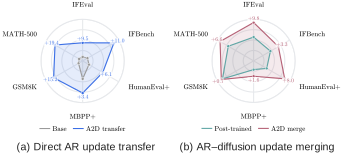
Enhancing Diffusion Language Models with Autoregressive Post-Training WeightsYiming Qin*, Ke Wang*, Amel Abdelraheem, Adam Hazimeh, Pascal Frossard arXiv preprint, 2026 arxiv / We introduce A2D, a training-free framework that transfers and composes autoregressive post-training updates in diffusion language models. Across recent diffusion language models, A2D improves instruction following, mathematical reasoning, and coding without additional training or inference-time computation. |
|
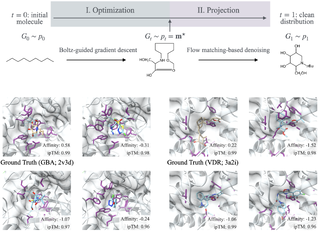
DBMol: Design of High-Affinity, Target-Specific Small Molecules through Structure Prediction ModelsYiming Qin*, Kai Yi*, Miruna Cretu, Sjors H. W. Scheres, Pietro Liò, Pascal Frossard ICML GenBio Workshop, 2026 arxiv / DBMol is a docking-dataset-free framework that uses structure prediction models to guide de novo small-molecule design, achieving strong affinity and pocket specificity without reinforcement learning or docking supervision. This project applies 2D graph generation for small-molecule design. |
|
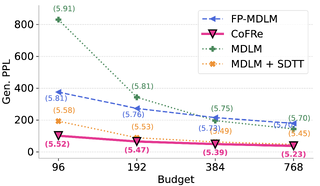
Fixed-Point Masked Generative ModelingAndrea Miele, Yiming Qin, Alba Carballo-Castro, Justin Deschenaux, Pascal Frossard NeurIPS, 2026 arxiv / We introduce CoFRe, a fixed-point framework for masked generative models with a looped architecture that reuses shared parameters, reducing parameters, training cost, and memory usage while improving low-budget generation across text and image modalities. |
|
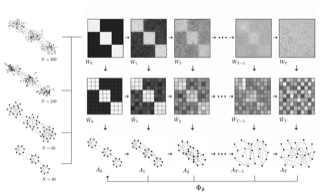
DiPhon: Diffusion on Graphons for Scalable Graph GenerationSergio Rozada, Yiming Qin, Manuel Madeira, Pascal Frossard, Alejandro Ribeiro NeurIPS, 2026 arxiv / We introduce DiPhon, a diffusion framework on graphons that enables models trained on small graphs to generate progressively larger graphs without retraining while preserving their core topological properties. |
|
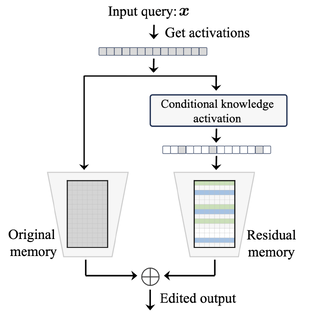
MEMOIR: Lifelong Model Editing with Minimal Overwrite and Informed Retention for LLMsKe Wang*, Yiming Qin*, Nikolaos Dimitriadis, Alessandro Favero, Pascal Frossard NeurIPS, 2025 arxiv / MEMOIR adds new knowledge to language models via a sparse, query-matched residual memory, enabling thousands of edits with minimal forgetting and strong generalization. |
|
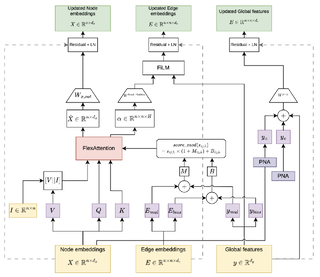
Efficient Edge-aware Attention Network for Graph GenerationVincent Jung*, Alba Carballo-Castro*, Yiming Qin*, Lonneke van der Plas, Pascal Frossard ICML Graph Foundation Models Workshop, 2026 We propose a kernel-friendly edge-aware attention layer for graph generation that is directly compatible with PyTorch FlexAttention, reducing GPU memory by around 65%. This work offers a complementary angle to SparseDiff for scalable graph generation. |
|
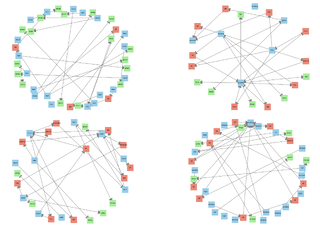
Generating Directed Graphs with Dual Attention and Asymmetric EncodingAlba Carballo-Castro, Manuel Madeira, Yiming Qin, Dorina Thanou, Pascal Frossard ICLR, 2026 arxiv / code / We propose DIRECTO, a discrete flow matching model with direction-aware encodings and dual-attention, plus new benchmarks, for better directed graph generation. It extends ideas from DeFoG to directed graphs and shows their robustness in a new setting. |
|
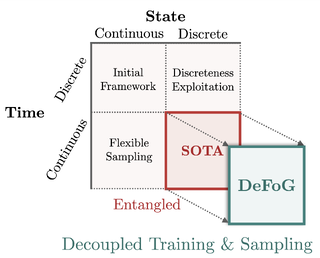
DeFoG: Discrete Flow Matching for Graph GenerationYiming Qin*, Manuel Madeira*, Dorina Thanou, Pascal Frossard ICML, 2025 Oral arxiv / code / Graph generation models often face limitations in sampling efficiency and flexibility due to tightly coupled training and sampling stages. We introduce DeFoG, a discrete flow matching framework that disentangles these stages, improving both efficiency and performance over existing diffusion models. |
|
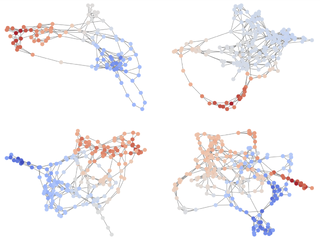
SparseDiff: Sparse Discrete Diffusion for Scalable Graph GenerationYiming Qin, Clément Vignac, Pascal Frossard TMLR, 2025 arxiv / code / Generative models for graphs struggle with scalability due to predicting interactions for all node pairs. We introduce SparseDiff, a denoising diffusion model that leverages sparsity to overcome this. It reformulates diffusion, denoising, and the model architecture around sparse graph representations. |
|
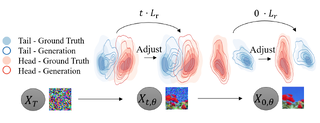
Class-balancing Diffusion ModelsYiming Qin, Huangjie Zheng, Jiangchao Yao, Mingyuan Zhou, Ya Zhang CVPR, 2023 arxiv / code / We observe significant performance degradation on tail classes in both diversity and fidelity, and propose Class-Balancing Diffusion Models (CBDM) that are trained with a distribution adjustment regularizer as a solution. |
Supervised projectsHere are some research projects that I have supervised. Open projects (for EPFL students) can be found here. Feel free to get in touch. |
|
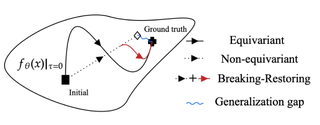
Balancing Symmetry and Efficiency in Graph Flow MatchingBenjamin Honoré, Alba Carballo-Castro, Yiming Qin, Pascal Frossard GRaM Workshop, ICLR, 2026 arxiv / We study the trade-off between symmetry and efficiency in graph flow matching, showing that properly modulating equivariance can accelerate convergence while delaying overfitting. |
|
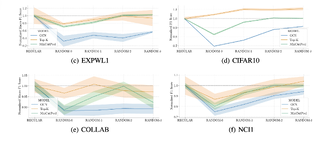
On the Role of Structure in Hierarchical Graph Neural NetworksLuca Sbicego, Sevda Öğüt, Manuel Madeira, Yiming Qin, Dorina Thanou, Pascal Frossard ICLR (Workshop), 2025 arxiv / Hierarchical GNNs still don’t outperform flat ones overall but recover better from structural perturbations. |
Other projectsHere are some projects that I have worked on. |
|
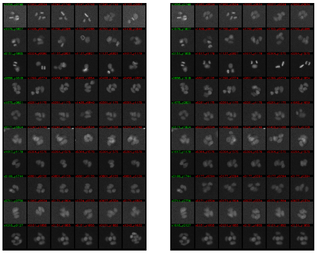
Learning Cell Dynamic Features for Unlabeled Video-Microscopies from Synthetic DataENS Ulm, 2021 We design a multi-task model with two heads: one trained on synthetic mitosis videos (SynDiv) using supervised/self-supervised tasks, and one trained on real microscopy videos (LSP) using self-supervised tasks. Joint training improves the learned representations, yielding better correlations with cell counts, division events, and genetic perturbations than models trained on SynDiv or LSP alone. |
|
Design and source code from Leonid Keselman and Jon Barron's website |